
Masterplank Ecommerce Case Study

TL;DR
Masterplank, a UK furniture manufacturer and retailer, needed its paid media to work more efficiently and contribute to the business’ bottom line. By rebuilding its Google and Meta accounts around product economics, we held online revenue level year on year whilst reducing media spend by 29.5%, lifting ROAS by 41.5% and putting the business on a stronger financial footing to scale in 2027.

The Challenge
Masterplank is a national furniture manufacturer and retailer, operating in one of UK ecommerce’s most crowded categories, competing in the same auctions as national retailers such as B&Q, Oak Furniture Land and Grain & Frame, each with substantial media budgets and strong brand recognition.
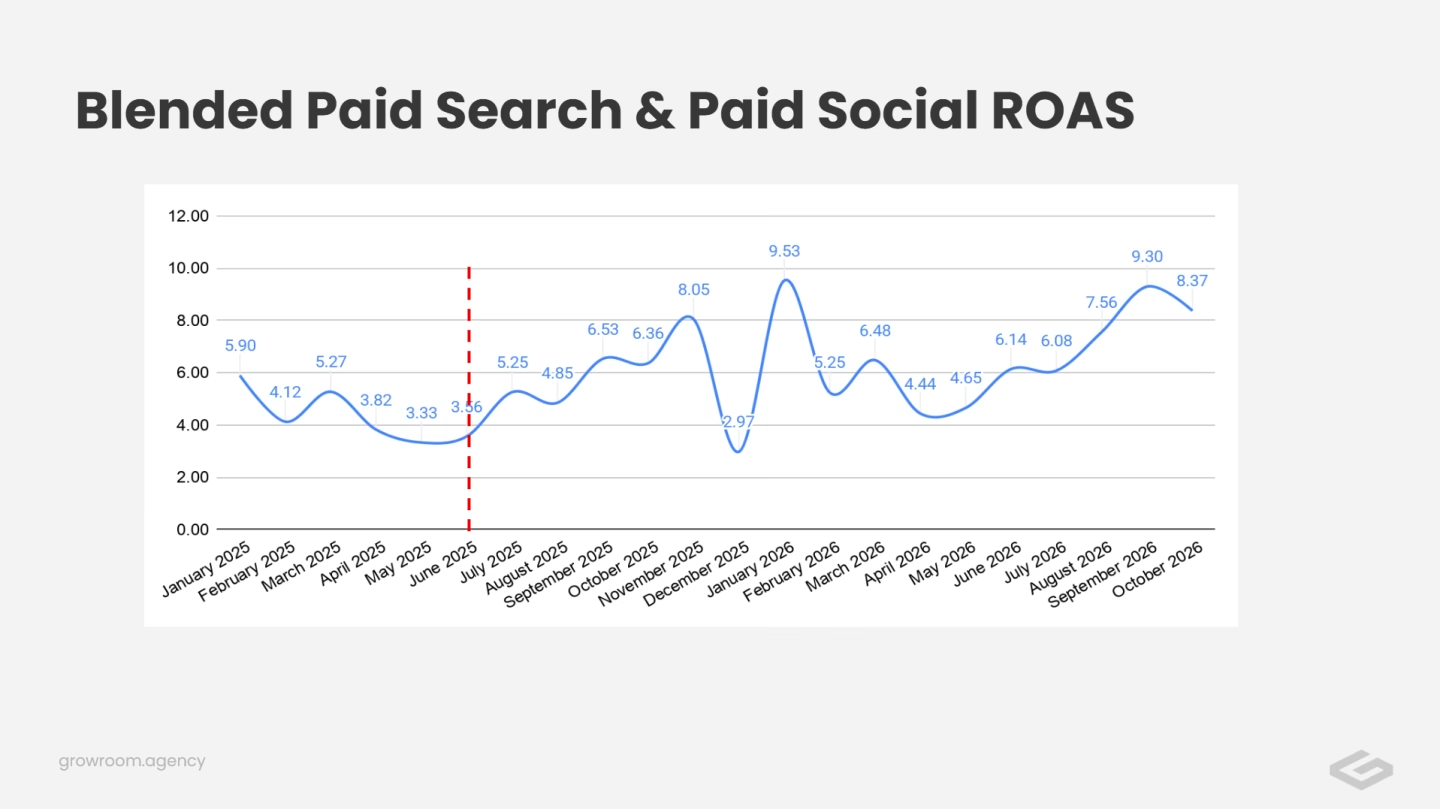
When Masterplank approached GrowRoom in June 2025, paid media was costing too much for the revenue it was generating. Inflated acquisition costs were eroding margins and making it harder to plan budgets alongside staffing and supply costs, the two main pressures that define the business’ cash flow.
The incumbent agency had kept the accounts running, but performance had plateaued. Campaigns were optimising towards revenue rather than profitable contribution, and the account structure gave the platforms’ bidding algorithms no visibility of which products actually made the business money.
The brief was clear: make paid media more efficient. Protect revenue, reduce spend.
The Strategy
We delivered a full restructure of Masterplank’s paid search and paid social accounts, built around three principles.
1. Structure around the products, not the platform
Within Performance Max, we segmented core product variants into dedicated asset groups, each with its own creative, product feed and audience signals. This gave Google cleaner, more specific learning signals, allowing bidding to concentrate on users with the highest propensity to purchase each variant, rather than averaging performance across the entire range.
2. Feed business economics into bidding
Not every sale is worth the same to Masterplank. We split Shopping into high-value and low-value segments, with core products excluded and managed through PMax, then applied business context in stock levels, profit and contribution margins into the account structure. This allowed budget to weight towards products that drive profitable contribution, and pull back from SKUs that win revenue at the expense of margin or are running low on stock.
3. Automation-first, with clear commercial guardrails
We moved the account onto value-based automated bid strategies and ad formats designed for modern search behaviour, where a single purchase journey can span Search, Shopping, YouTube and Discover. Rather than micro-managing bids, our role became controlling what the algorithms learn from: the structure, the data inputs and the targets.
On Meta, we applied the same thinking, consolidating campaigns to strengthen learning signals and aligning budget with the product lines and audiences generating profitable return. Using specifically segmented product catalogues, Advantage+ shopping setup, and a prospecting vs retargeting split, with a creative approach that allowed automation to flex and apply relevance.
This was a ground-up rethink rather than an optimisation exercise: an account designed to run on the business’s numbers, not the platform’s.
The Results
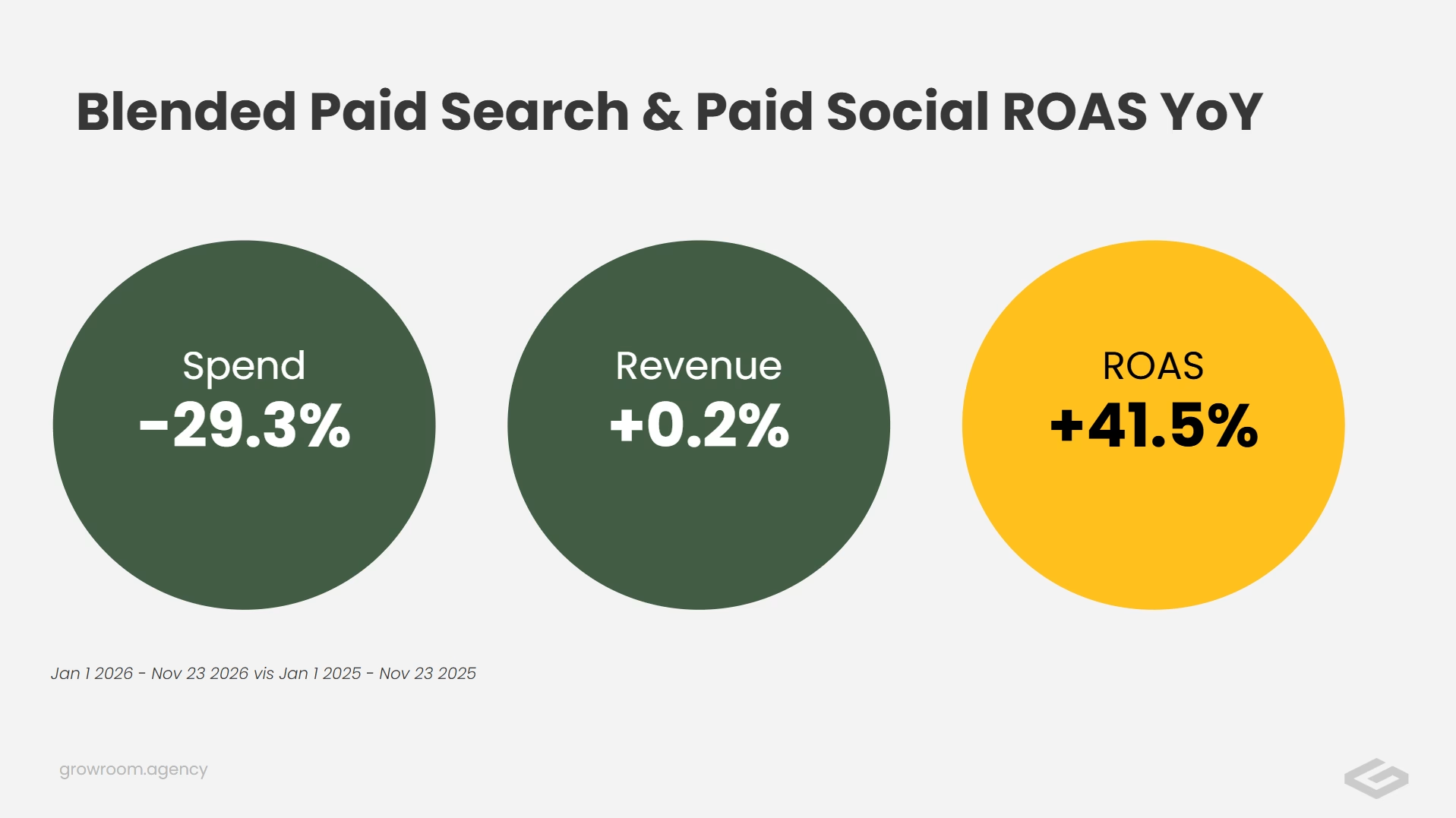
Following the restructure, Masterplank significantly outperformed their year-on-year baseline:
- +0.2% increase in revenue – holding steady
- -29.5% reduction in media spend
- +41.5% increase in ROAS
- +44.38 increase in AOV
Masterplank now generates the same revenue for almost a third less media investment.
The revenue is protected and the media spend efficiency goes straight into the business’ bottom line. Paid media is now a profitable contributor to the business rather than a drain on margin, leaving Masterplank with stronger cash reserves heading into 2027, when it plans to scale.
Just as importantly, the business now has the right foundations to grow. Its accounts are structured around modern search with a focus on product profitability, so as budgets increase, investment will flow to the products and audiences already proven to deliver a profitable return.
The Review
“We tried a few different digital marketing agencies with poor results before finding GrowRoom. Their paid media expertise turned our business profitable again in a really short space of time, we have a really good plan moving forwards! They are really good at keeping you updated and bringing new ideas to the table. Would highly recommend!” – Stephen Evans, Founder & Director